
Biography
Welcome! 🙂
———————-
I am an engineer, writer and researcher. I am currently a Professor Joe Greene Postdoctoral Fellow in the lab of Prof. Rashid Bashir (Dean of The Grainger College of Engineering at UIUC). (Lab Homepage)
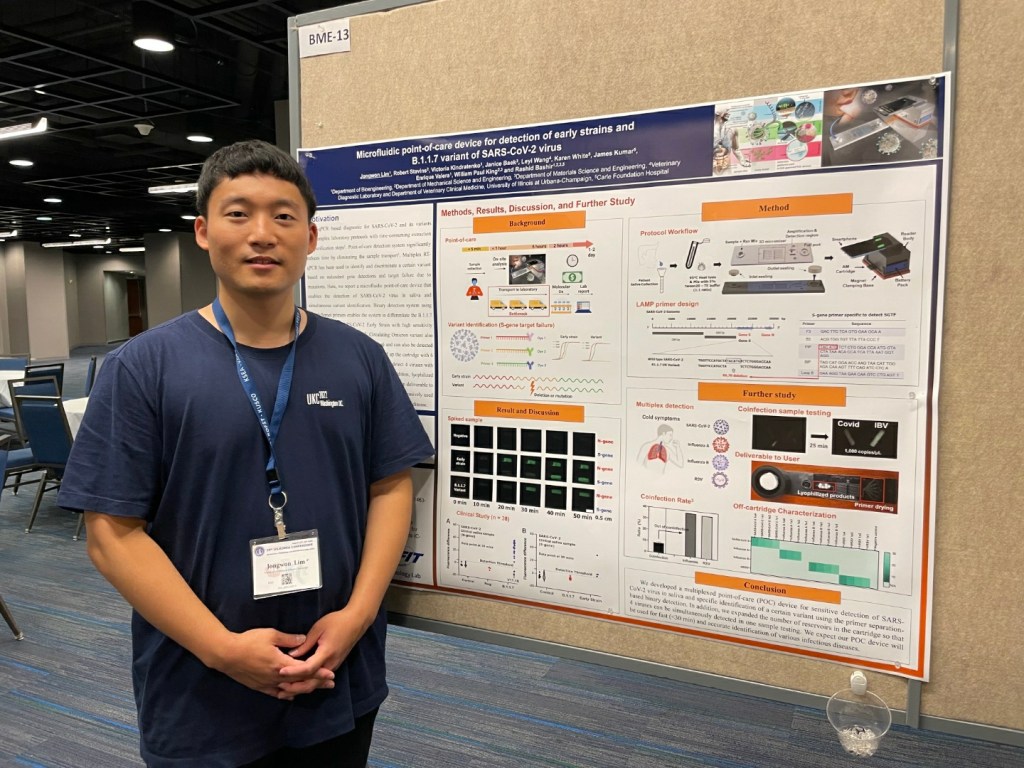
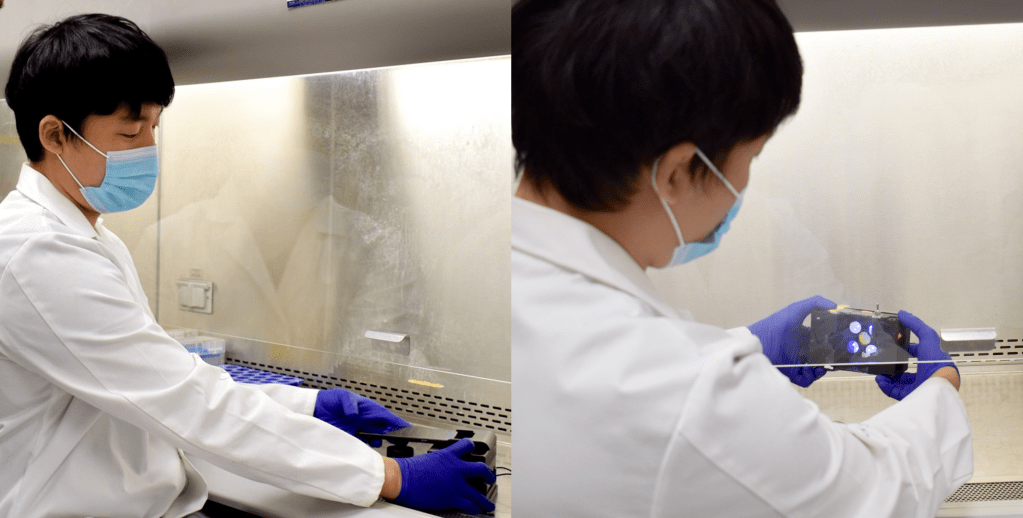
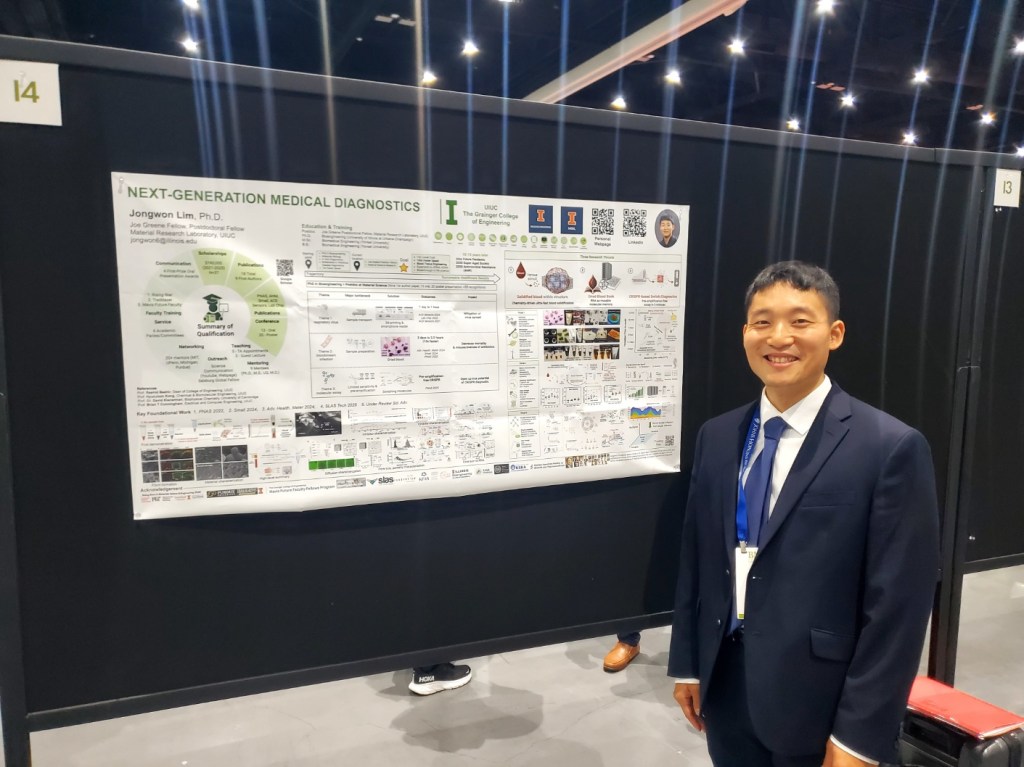
I develop bioengineering and Molecular Diagnostic platforms. I am interested in the translational research of bioengineering, where people can make use of it. I firmly believe that my existence value can be represented and quantified by how many people I have influenced in the world. I’ve always been captivated by the pragmatism of the engineering, where the judgement on a progress and advancement of technology is made through the practical testing within human experience. Years of combined experience of start-up activity for developing countries and extensive research on point-of-care diagnostics for COVID have convinced me that I want practical values over theoretical discovery. Bioengineering and diagnostics, where the product I developed can be immediately used and therefore my contribution to people’s life is easily visualized, are desirable fields that can provide a realistic value to the world and consequent internal impetus for my continuous research. Complex disease-related themes in real-life will be tenaciously explored with persistence during my Ph.D. research and following paths within academia. I am currently conducting researches on the development of diagnostic assays and devices. Two main projects are the detection of respiratory infectious diseases (SARS-CoV-2, Influenza and RSV) and the detection of blood borne disease (Sepsis, and Hepatitis).
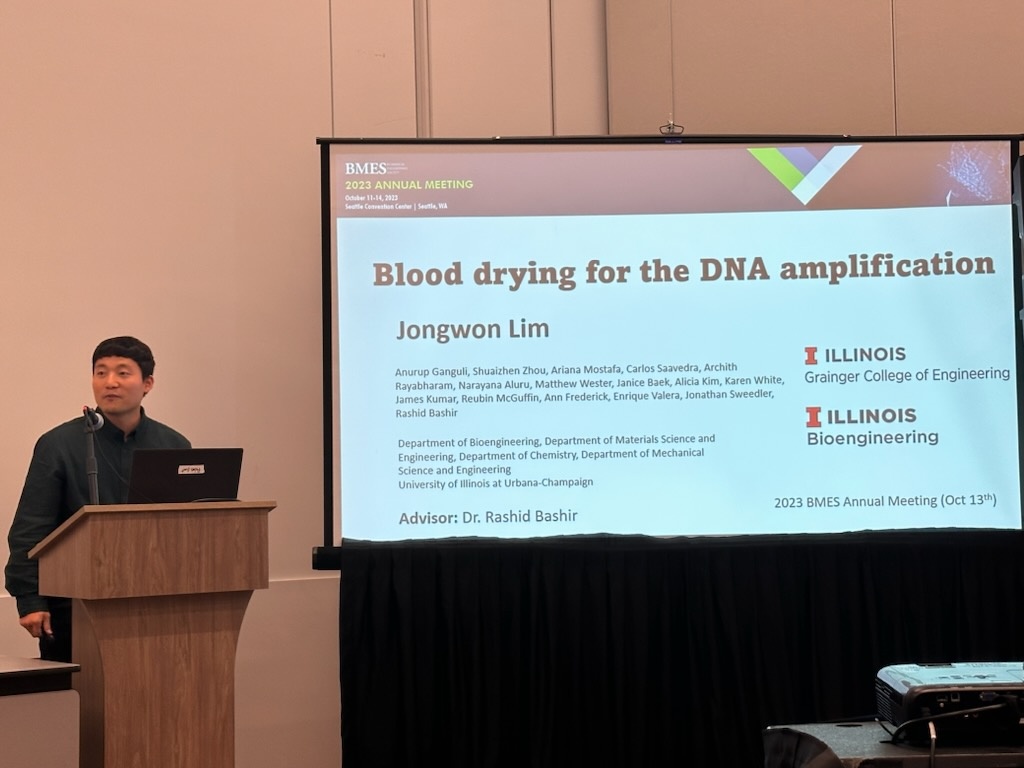
I developed a novel blood drying method that can replace the purification of target DNA by validating its performance with pathogen-spiked blood samples and clinical samples, and studying the mechanism of drying process to verify optimal conditions ensuring better amplification results. A novel approach, called biphasic (solid + liquid phases) method, has been developed that achieves inhibitor inactivation and DNA amplification simultaneously without the need for a purification step. The biphasic method has been shown to significantly improve detection limits for bacteria such as E. coli, MRSA, and MSSA using loop-mediated isothermal amplification (LAMP) and recombinase polymerase amplification (RPA). Factors such as drying time, sample volume, and material properties have been characterized to increase sensitivity and expand the application of the biphasic assay to blood diagnostics. With further automation, this biphasic technique has the potential to be used as a diagnostic platform for the detection of pathogens, eliminating lengthy culture steps.
I received my B.S. (2017) and M.S. (2020) in Biomedical engineering, from Yonsei University. I worked as a medic in US army as a KATUSA (Korean Augmentation To the US Army) and enlisted in 2013. I was discharged as a sergeant in Oct, 2014. I visited the United States as an exchange student in 2015.

Email, Google Scholar, LinkedIn profile
 jongwonlim.com